Best Google Translate Alternatives in 2026: 7 Tools for Superior Translation Quality
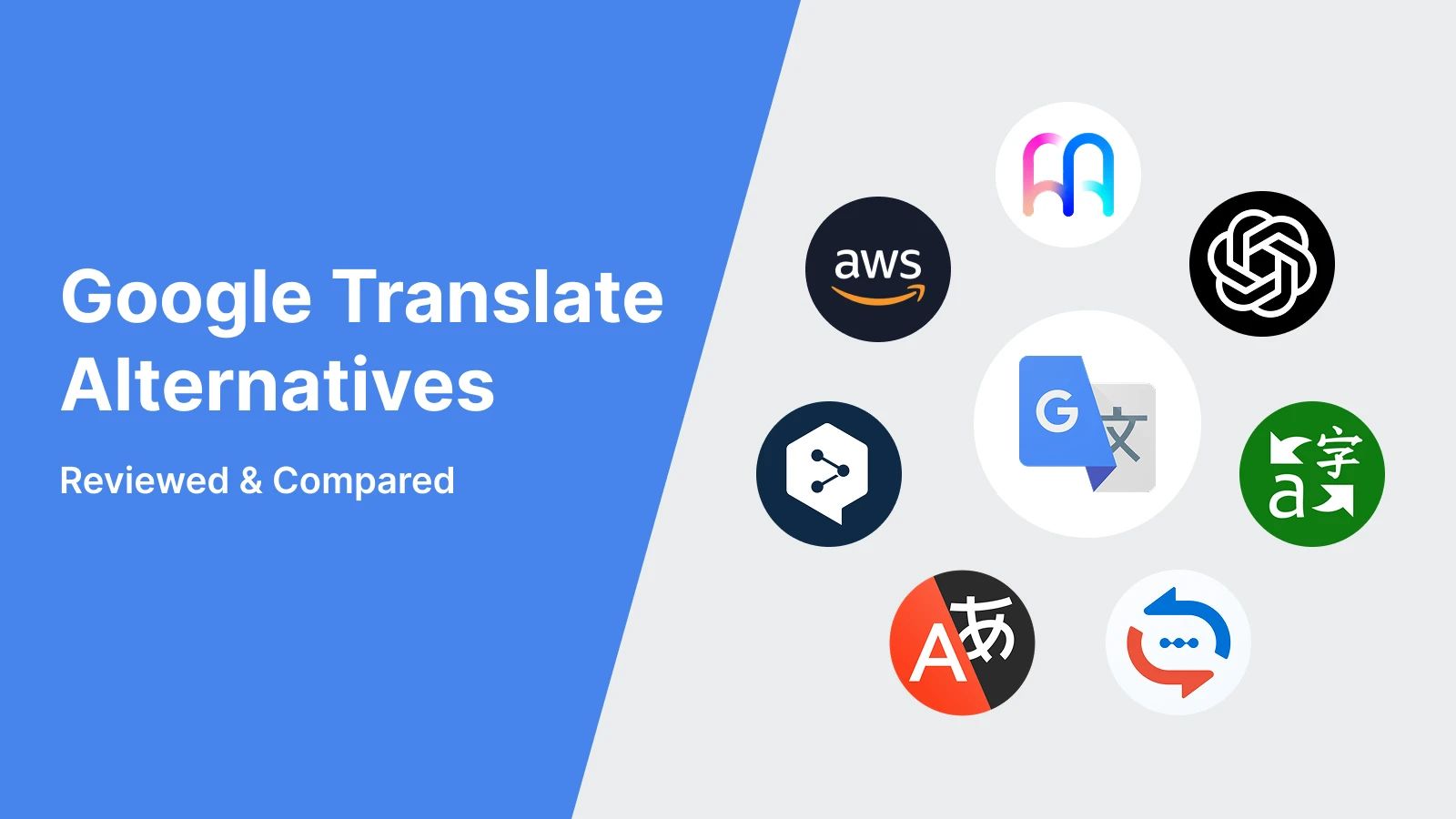
This guide breaks down seven of the best Google Translate alternatives in 2026, comparing them on accuracy, privacy, features, and value so you can pick the right translation tool for your specific needs.

Introduction
Google Translate is the world's most widely used machine translation service, and for good reason. It's free, fast, and covers more languages than almost any competitor. But if you've ever run a business email, a medical document, or nuanced marketing content through it, you've likely noticed the cracks.
Translation accuracy drops sharply for certain language pairs. Idiomatic expressions get mangled. Tone and formality vanish. And behind the scenes, Google's privacy policy allows your submitted content to be used to train its AI models, which raises real concerns when you're working with sensitive material.
Translation needs can vary significantly based on use cases, including travel and document formatting, and a one-size-fits-all engine doesn't always cut it. Several translation tools offer better privacy than Google Translate, and many now provide features like tone control, terminology management, and AI model diversity that Google simply doesn't match.
This guide breaks down seven of the best Google Translate alternatives in 2026, comparing them on accuracy, privacy, features, and value so you can pick the right translation tool for your specific needs.
How We Chose the Best Google Translate Alternatives
Not every translate alternative excels in the same areas. Here's what we evaluated:
- Translation accuracy across multiple language pairs and contexts. We looked at performance for high-resource languages (English, Spanish, German) and low-resource or non-Latin script languages, using recent studies and blind evaluations.
- AI model diversity and comparison capabilities. Can you compare outputs from different translation engines or large language models side by side?
- Privacy and data security features. Does the tool store your content? Does it use submissions for model training? What certifications does it hold?
- Tone and style control options. Can you set formality levels, select translation styles, or enforce specialized terminology?
- Support for different content types. Text, full documents, images, voice conversations, camera translation.
- Ease of use and integration capabilities. Web interface, desktop app, api access, seamless integration with professional workflows.
- Pricing and value proposition. Free tier availability, paid tier limits, enterprise pricing.
- Language coverage and specialized features. Total languages supported, regional strengths, offline mode, and more.
Top 7 Google Translate Alternatives for 2026
1. MixTranslate
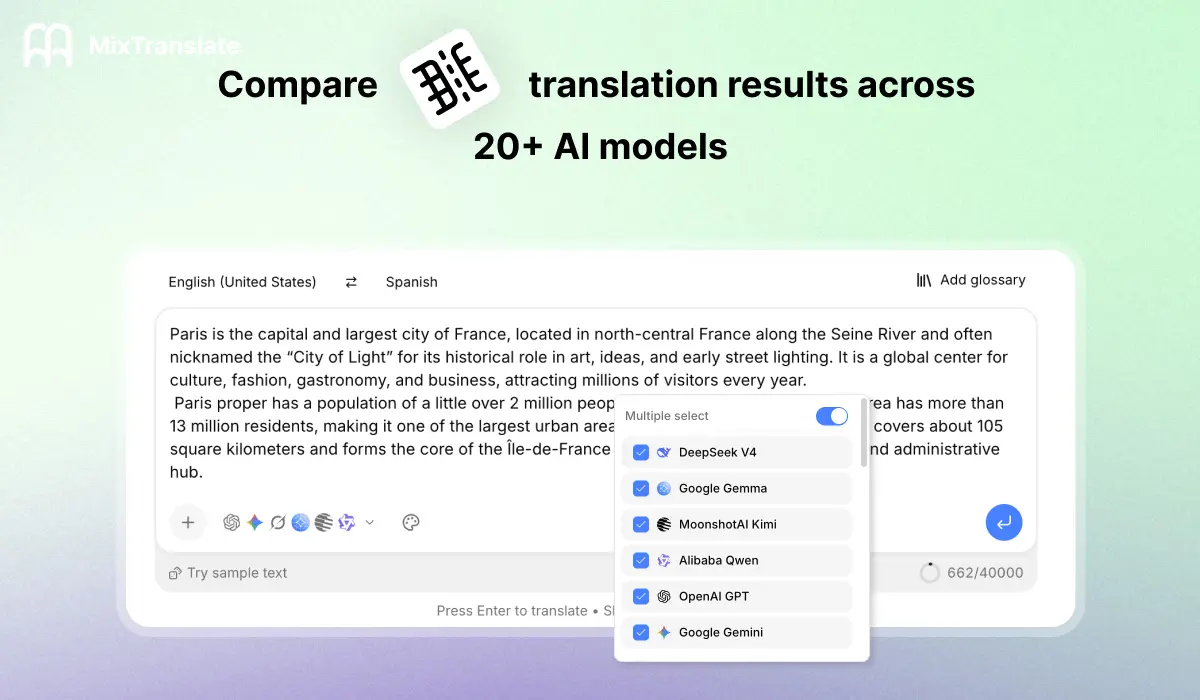
MixTranslate is an AI-powered translation platform that lets you translate text into 150+ languages and compare outputs from over 20 AI models, including ChatGPT, Claude, Gemini, and DeepSeek. New users receive 110K free credits to start translating immediately and get 100K free credits every month.
Why It Stands Out
The standout feature is model diversity. Instead of relying on a single translation engine, MixTranslate lets you see how different AI models interpret your content side by side. The platform automatically adjusts and auto-suggests the best translation based on context and tone analysis, so you're not guessing which output sounds most natural.
This is particularly useful for nuanced content, where a single engine might miss the mark on tone or cultural adaptation. Having 20+ models means you can spot differences in how each handles idioms, formality, and key terms.
Best For
- Content creators and marketers who need tone-specific translations for marketing copy and marketing content
- Users who want to compare multiple AI outputs for quality assurance before publishing
- Privacy-conscious users and businesses handling sensitive content
Key Strengths
- 20+ AI models for comprehensive translation comparison across different languages
- Advanced tone and style control with terminology consistency
- Strong privacy protection: MixTranslate does not store translations or use them for model training
- Image text extraction capabilities for translating content from photos
- Clear quality metrics and scoring system to help you pick the best output
Possible Limitations
- Credit-based system may require monitoring usage on high-volume projects
- Newer platform with an evolving feature set
2. DeepL
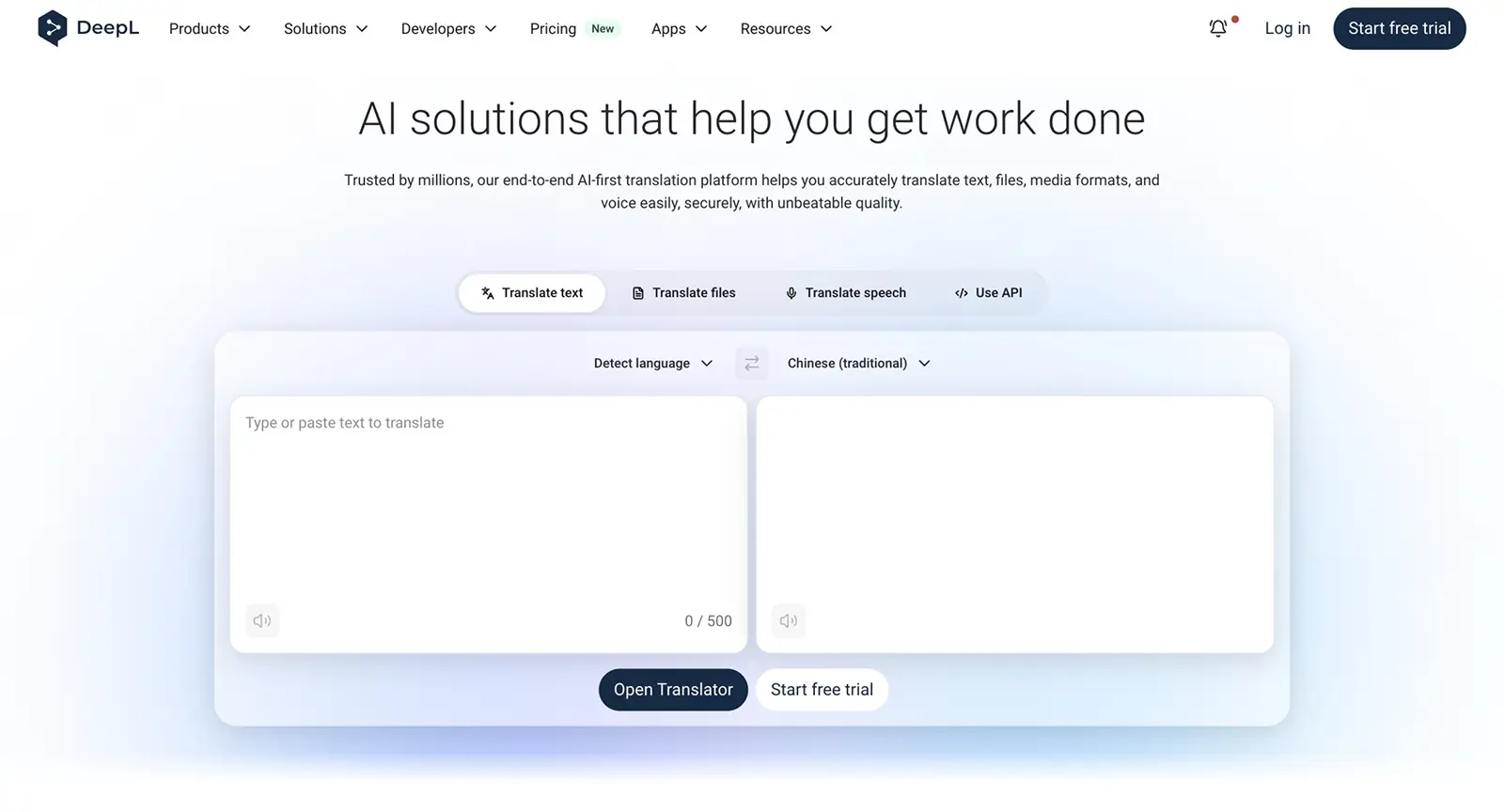
DeepL is a neural translation service that has built its reputation on producing natural-sounding translations, especially for European languages. It supports document translation with formatting preservation and offers glossary controls for consistent output.
Why It Stands Out
When talking about how accurate is Google Translate, DeepL is preferred for accuracy in context and idioms, and recent blind tests back that up. In a March 2026 Slator evaluation involving roughly 48,000 translations across 16 language pairs, DeepL achieved a win rate of approximately 94% against competitors including GPT-5.2, Gemini, Claude, Google Translate, and Microsoft Translator.
DeepL supports document translation for .docx and .pptx files with layout preservation, which matters when you need to translate documents like contracts or presentations and keep formatting intact.
Best For
- European businesses and content requiring superior accuracy for supported language pairs
- Business document translation with complex formatting needs
- Users prioritizing translation quality over sheer language variety
Key Strengths
- Exceptional accuracy for supported European languages with natural tone
- DeepL supports 100+ languages with over 800 combinations possible
- Strong privacy protections: DeepL is subject to EU data protection laws, holds ISO 27001 and SOC 2 Type II certifications
- Glossary and formality controls for consistent output
Possible Limitations
- DeepL supports 100+ languages, less than Google Translate's 200+, which limits coverage for rare or low-resource languages
- DeepL's free tier (Web/App) allows 500,00 characters per month; higher pricing kicks in for advanced features
- A 2026 MonTI study found that LLMs outperformed DeepL on discontinuous multiword expressions
3. Microsoft Translator
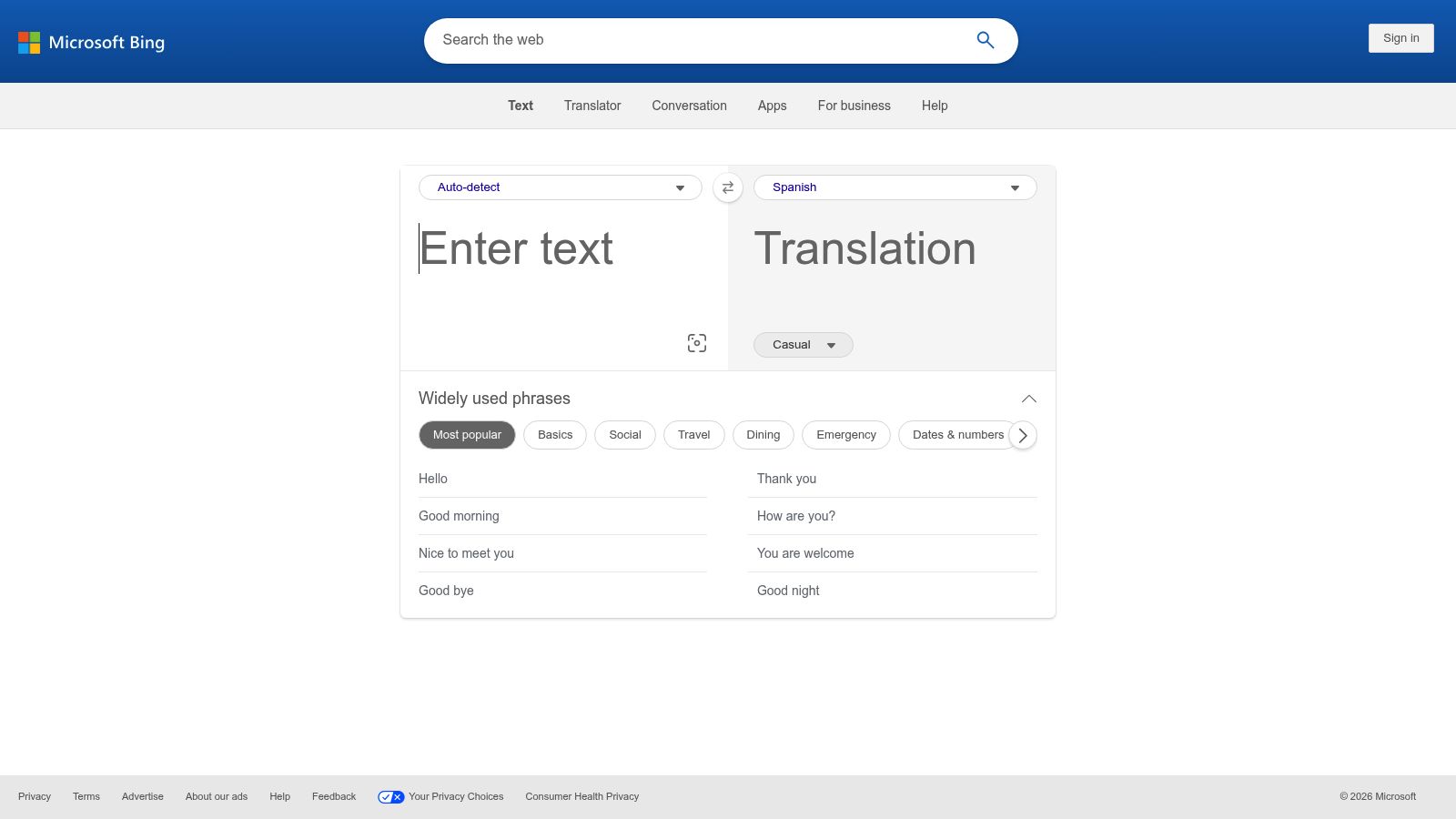
Microsoft Translator is an enterprise-focused translation service deeply embedded in the Microsoft ecosystem, with native integration across Office 365, Outlook, Teams, and Azure.
Why It Stands Out
If your team already lives inside Microsoft Office, this is the path of least resistance. Microsoft Translator supports 113 languages, the highest among alternatives listed here, and offers seamless integration with tools your team already uses. Its multi-person conversation translation makes it practical for live conversations and meetings across languages.
The service also operates a "no trace" mode for Office translations: content is processed in memory, not stored or sampled, and not used for model improvement.
Best For
- Microsoft 365 users and enterprise environments
- Teams needing collaborative translation workflows
- Businesses requiring integration with existing microsoft office infrastructure
Key Strengths
- Native integration with Office suite and Azure for professional workflows
- Microsoft Translator supports over 100 languages for voice translation and over 100 languages for business use
- Enterprise-grade security and compliance
- Microsoft Translator offers a free tier for translation with generous usage limits
Possible Limitations
- Best suited for users already in the Microsoft ecosystem
- Limited advanced AI model options compared to multi-model platforms
- Less granular tone and style control than DeepL or LLM-based tools
4. ChatGPT/Claude (LLM-based Translation)
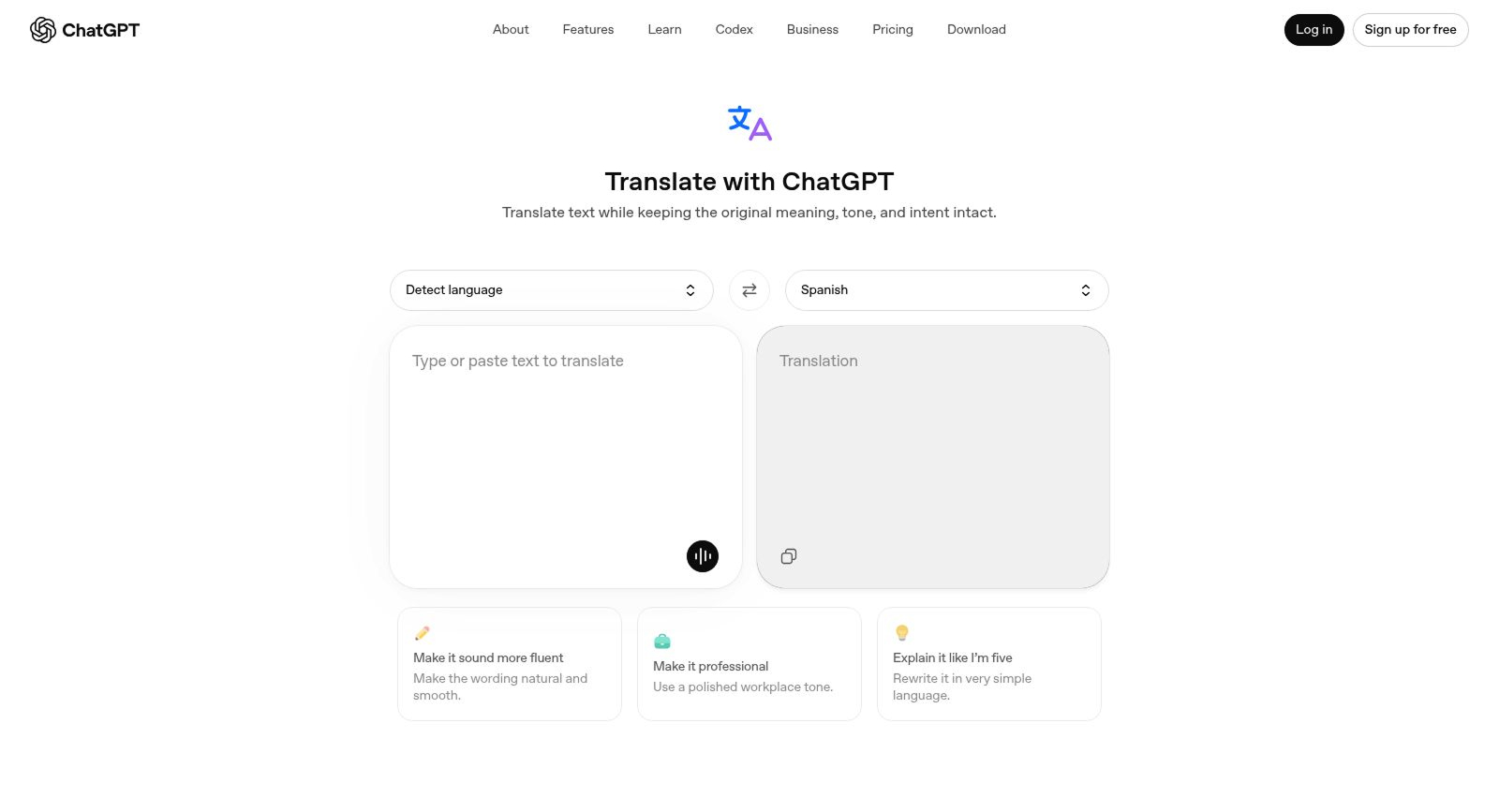
Large language models like ChatGPT and Claude aren't traditional translation apps, but they've become some of the most capable tools for context aware translations, especially when content requires cultural adaptation or creative flexibility.
Why It Stands Out
LLMs excel at understanding context in ways that traditional neural machine translation engines can't match. A BMJ study (2025) comparing Google Translate and GPT-4 for translating patient discharge instructions found GPT-4 achieved approximately 89% accuracy for English-to-Russian, versus Google Translate's roughly 80%. For English-to-Chinese, GPT-4 scored about 95% compared to Google's 90%.
These models can explain translation choices, offer alternatives, and adapt output for specific translation styles, from formal business tone to casual everyday use.
Best For
- Creative content and marketing copy requiring cultural adaptation
- Complex or specialized content needing context explanation
- Users who want interactive translation assistance with the ability to iterate
Key Strengths
- Exceptional context awareness and cultural sensitivity
- Interactive explanations and alternative suggestions
- Strong handling of idiomatic expressions and creative content
- Customizable instructions and style guidance through prompting
Possible Limitations
- Requires manual prompting for each translation, no batch workflow
- Usage costs can add up for high-volume translation
- For consumer ChatGPT users, content may be used for training unless you opt out; enterprise tiers default to no training
5. Amazon Translate
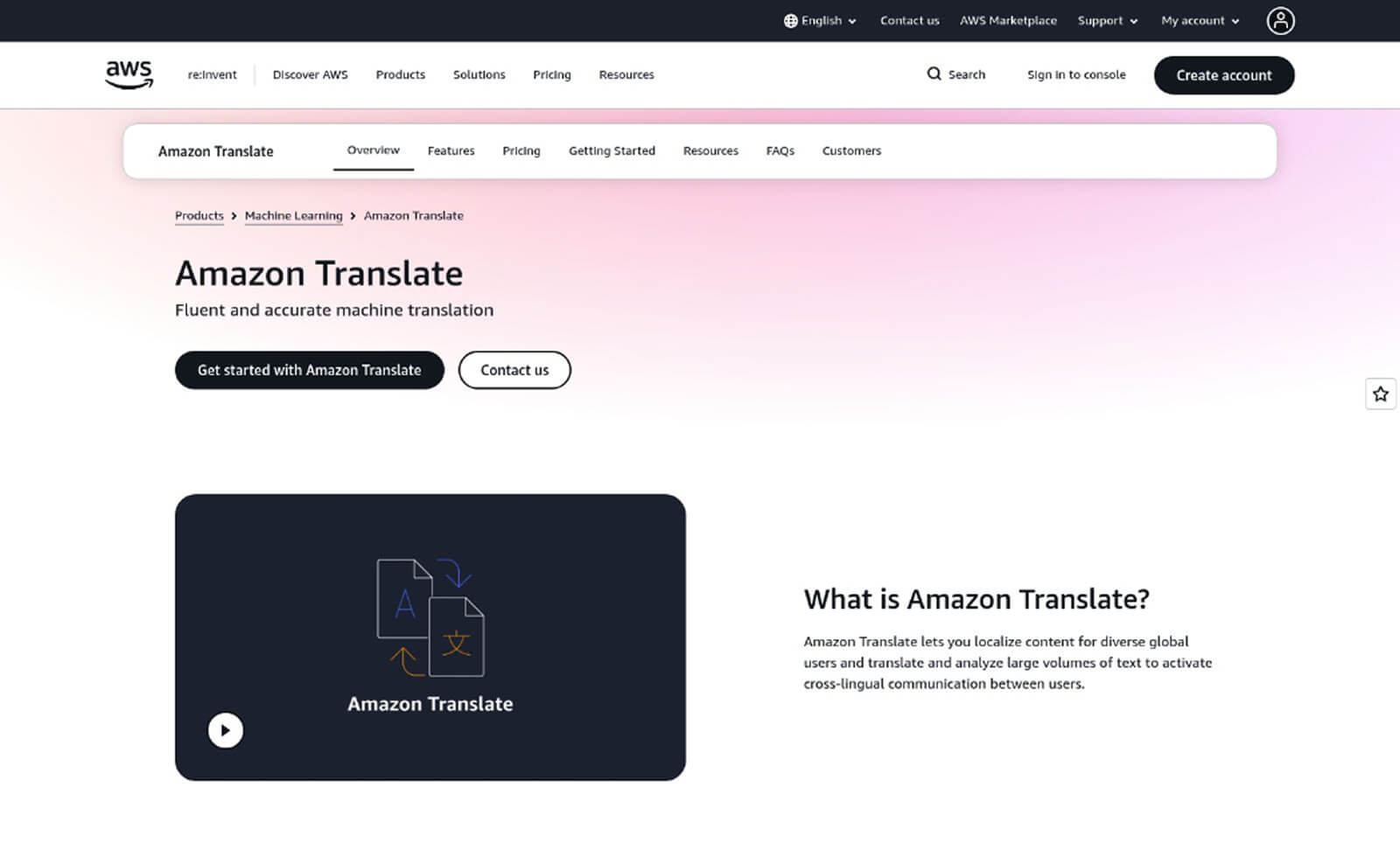
Amazon Translate is a cloud-based enterprise translation service built on AWS infrastructure, designed for high-volume and automated translation workflows.
Why It Stands Out
For organizations already running on AWS, Amazon Translate offers massive scalability and two standout customization features: custom terminology files (to preserve brand names and specialized terminology) and Active Custom Translation, which uses parallel data to customize translations at runtime without retraining models.
Amazon Translate currently supports 75+ different languages and is built for scale rather than casual use.
Best For
- Large enterprises with AWS infrastructure needing business documents translated at scale
- High-volume translation needs and automated workflows
- E-commerce and customer support applications requiring a translation api
Key Strengths
- Enterprise-grade scalability and reliability
- Custom model training and terminology management for consistent key terms
- Amazon Translate's free tier allows 2,000,000 characters monthly, which is generous for testing and moderate volume
- Real-time and batch translation options
- Amazon Translate supports 75+ languages for business document translation
Possible Limitations
- Requires technical setup and AWS knowledge; this isn't a consumer-friendly web interface
- Limited support for casual users or those without developer resources
- Document translation capabilities vary among different translation tools, and Amazon's layout preservation is less polished than DeepL's
6. Reverso
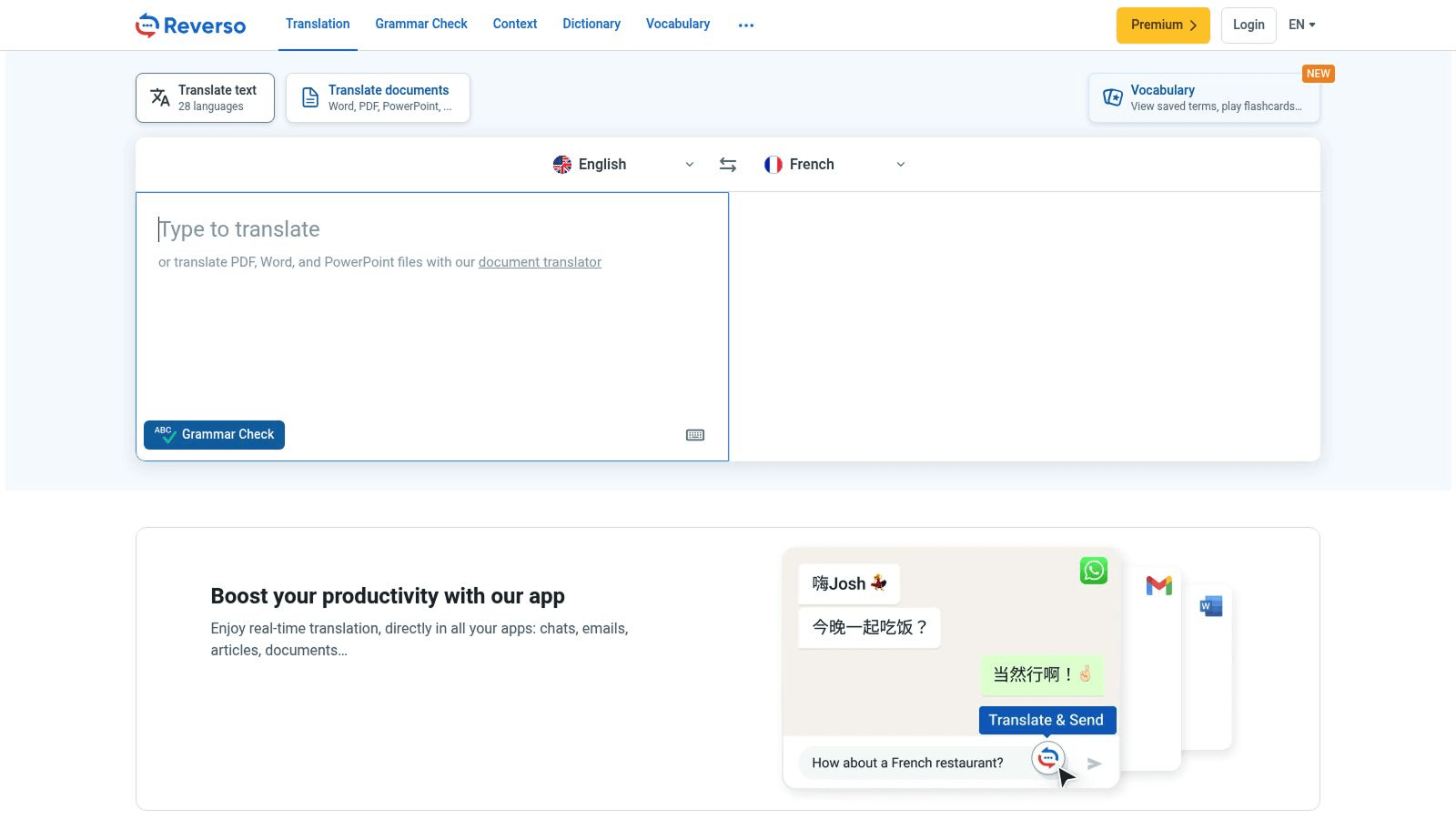
Reverso is a context-focused translation platform that pairs machine translation with extensive bilingual sentence examples drawn from real-world sources like literature, film subtitles, and government documents.
Why It Stands Out
Where most tools give you one app with a single output, Reverso Context provides real-life examples to aid language learning, showing how phrases actually appear in authentic text. This helps users choose among possible translations based on how native speakers would use them.
Reverso also offers a Documents feature supporting 29+ languages with layout preservation, OCR for scanned PDFs, and collaborative review workflows. Its infrastructure is 100% European-hosted with ISO 27001 certification.
Best For
- Language learners who want to understand context and usage patterns
- Users needing examples of phrases in real-world contexts
- Teams requiring collaborative translation and human review features
Key Strengths
- Extensive bilingual sentence examples and context for accurate translations
- Grammar, conjugation, and pronunciation guides
- Collaborative features for team translation projects
- GDPR compliant with European hosting
Possible Limitations
- Smaller language selection compared to major competitors
- Interface can feel cluttered with example content
- Advanced features sit behind a paid tier (Premium/Pro plans)
7. Yandex Translate
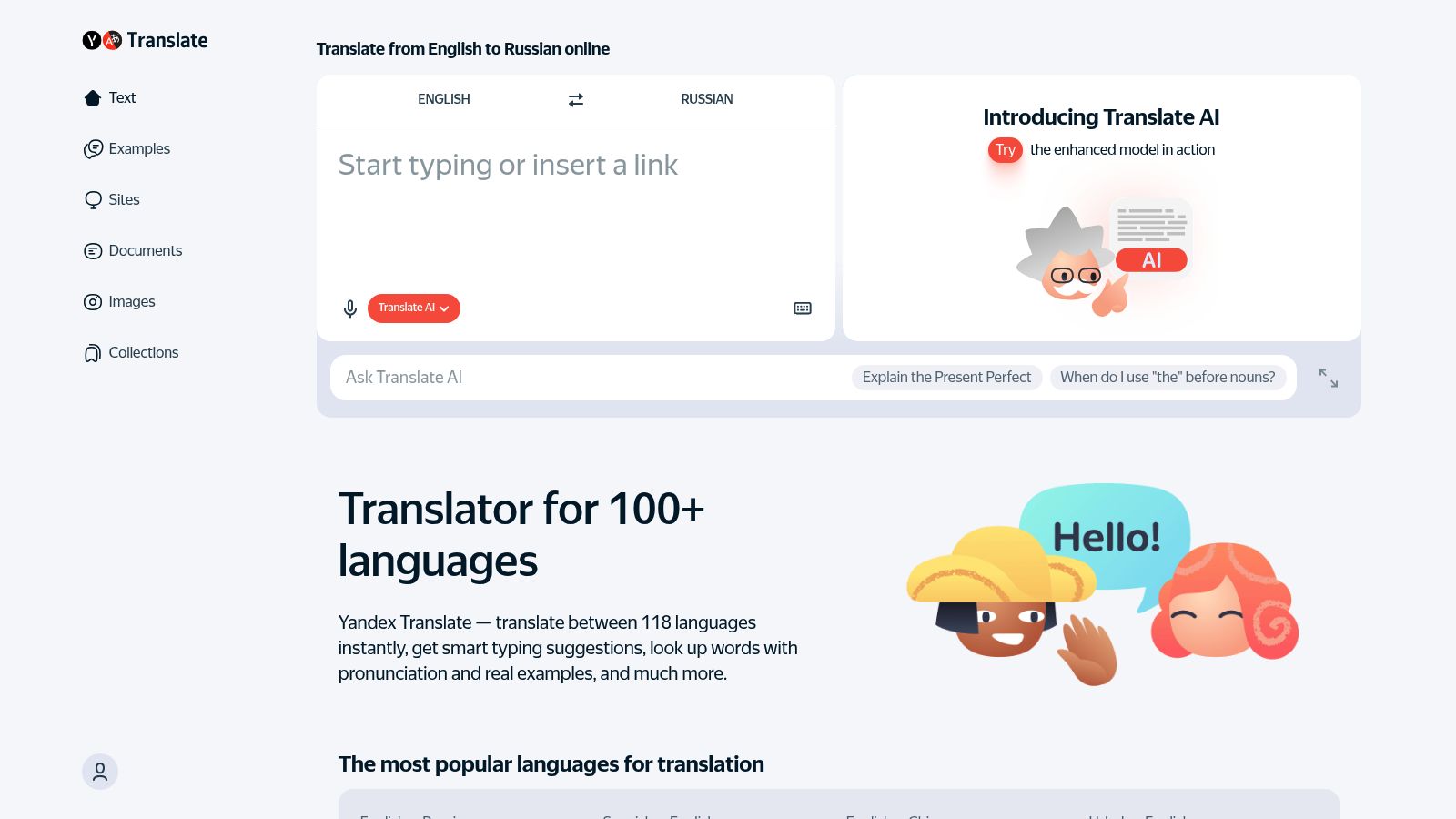
Yandex Translate is a Russian-focused translation service with broad global reach, offering strong mobile features including camera translation, image translation, and offline capabilities.
Why It Stands Out
For Russian and Eastern European languages, Yandex delivers exceptional accuracy that other tools struggle to match. Its mobile app includes speech to text translation, camera mode for signs and documents, and offline mode for travelers.
Yandex Translate supports 89+ different languages, and Yandex Translate charges $3.94 per million characters, making it one of the more affordable options for volume usage.
Best For
- Users working with Russian, Ukrainian, and other languages in the Eastern European family
- Mobile users needing camera translation for signs and word files in the field
- Travelers in Russia and former Soviet regions
Key Strengths
- Superior Russian and Eastern European language support
- Comprehensive mobile app with camera features and voice translation
- Offline capabilities for travel without connectivity
- Affordable pricing with api access for developers
Possible Limitations
- Significant data privacy concerns due to Russian ownership and legal obligations; reports have flagged Yandex analytics tools appearing in popular apps
- Less accurate for non-Russian language pairs
- Fewer advanced features like tone control or document layout preservation

Quick Comparison of the Best Google Translate Alternatives
| Tool | Best For | Languages | Free Tier | Privacy |
|---|---|---|---|---|
| MixTranslate | AI model comparison and tone-specific translations | 150+ | 100K chars/month | No data storage or training |
| DeepL | European language accuracy and document formatting | 100+ | 50K chars/month | EU data laws, ISO 27001 |
| Microsoft Translator | Enterprise integration and collaborative workflows | 113 | Yes | No-trace mode available |
| ChatGPT/Claude | Creative content and context-heavy translations | 40+ | Limited free tier | Opt-out required (consumer) |
| Amazon Translate | High-volume enterprise and AWS integration | 75+ | 2M chars/month | AWS encryption standards |
| Reverso | Language learning and contextual understanding | 29+ | Yes | European hosting, ISO 27001 |
| Yandex Translate | Russian and Eastern European languages | 89+ | Yes | Privacy concerns noted |
How to Choose the Right Google Translate Alternative
Choose Based on Your Content Type
The best google translate alternative for you depends heavily on what you're translating.
- Marketing copy and creative content: LLMs (ChatGPT/Claude) or MixTranslate's multi-model comparison excel here, since tone and cultural adaptation matter more than raw speed. For a quick test, try MixTranslate's Spanish Translator to see how different models handle the same marketing message.
- Technical documentation and business documents: DeepL or Amazon Translate with custom terminology will keep specialized terminology consistent. When layout matters for contracts or presentations, DeepL's formatting preservation is hard to beat.
- Casual communication and everyday use: Google Translate or Microsoft Translator work fine. Google Translate supports more languages than most alternatives, and microsoft translator supports more than enough for daily needs.
- Creative and literary content: LLM-based tools handle idiomatic and nuanced content far better than any traditional translation engine.
It's worth noting that other google translate alternatives exist beyond this list. JotMe provides live translation understanding tone and context, and JotMe translates multiple languages simultaneously in real-time. JotMe also translates technical terms accurately in real-time conversations. Easy Translate offers support for over 200 languages, and TranslatePress AI offers 200,000 words yearly for its Business plan. Lara Translate supports 200+ languages for business-grade workflows.
Choose Based on Language Requirements
Language pair availability varies dramatically:
- For European languages, DeepL delivers the highest translation accuracy in blind tests
- For many languages across different families, Microsoft Translator (113 languages) or MixTranslate (150+ languages) give you the broadest coverage to translate text across more languages
- For Russian and Eastern European languages, Yandex remains the strongest option
- For serving international clients across other languages, check whether your specific language pair is supported before committing
Google Translate charges nothing for basic usage and covers 100+ languages, so for sheer breadth in a free version, it's still useful as a baseline. But translation quality for non-European and low-resource language pairs is where alternatives pull ahead. A Pew Research study found that using Google Translate for Greek reduced coding reliability from α=0.76 to α=0.58, and for Korean from α=0.83 to α=0.66.
Choose Based on Privacy and Security Needs
If you handle sensitive content, privacy-focused translation tools minimize data tracking and ensure user data remains local. Here's how the options stack up:
- Strongest privacy: MixTranslate (no storage, no training), DeepL (EU data laws, ISO/SOC certified), Reverso (European hosting, ISO 27001)
- Enterprise-grade controls: Microsoft's no-trace mode, Amazon's AWS encryption
- Caution advised: Yandex (Russian legal jurisdiction), LLM translation tools (content may be used for AI training)
- Open-source alternatives: Argos Translate is designed specifically for offline use and is open-source. TranslateLocally is an open-source tool that runs entirely offline on your computer. LibreTranslate is a self-hosted open-source translation service that emphasizes privacy.
- Lara Translate offers explicit privacy controls for sensitive content, making it another option for regulated industries.
Choose Based on Integration Requirements
Your workflow dictates which tool saves you the most time and helps you save money:
- Microsoft ecosystem: Microsoft Translator offers native integration with Outlook, Teams, and Azure, plus a translation api for custom workflows
- AWS infrastructure: Amazon Translate plugs directly into your existing cloud setup for high-volume, automated pipelines
- Multi-model comparison: MixTranslate provides a single web interface for comparing different apps and models without switching between tools
- Developer workflows: Most tools here offer api access, but Amazon and Microsoft have the most mature enterprise SDKs
- Supported formats: Document translation capabilities vary among different translation tools. If you need to translate documents in specific formats, check whether the tool handles your file types. DeepL handles .docx and .pptx natively. Reverso handles scanned PDFs with OCR. Not all tools can process a whole document while preserving layout.
Which Google Translate Alternative Is Best for You?
Here's the short version:
- Choose MixTranslate if you want to compare multiple AI models in one place and need advanced tone control with strong privacy. It's the right google translate alternative for anyone tired of relying on a single ai translator.
- Choose DeepL if you primarily work with European languages and need the highest translation accuracy with document formatting preservation.
- Choose Microsoft Translator if you're in the Microsoft ecosystem and need enterprise collaboration with high quality translations across 113 languages.
- Choose ChatGPT/Claude if you translate creative content requiring cultural adaptation and want interactive, context-heavy translation assistance.
- Choose Amazon Translate if you need massive scale and AWS integration. Amazon Translate's free tier makes it easy to test before scaling.
- Choose Reverso if you're learning languages and want contextual examples alongside your translations.
- Choose Yandex Translate if you frequently work with Russian or Eastern European content and need strong mobile and offline features.
For professional use, many teams combine different apps: one tool for high-volume document translation, another for nuanced marketing content, and a comparison tool like MixTranslate to verify the best output. Google translate vs these alternatives isn't always an either/or decision.
Final Thoughts
The best alternative to Google Translate in 2026 depends on what you're translating, which languages you need, and how much you care about privacy and tone control. No single translation service dominates every category.
What's changed in recent years is that translation quality now varies as much by engine diversity as by language pair. Tools that let you compare outputs from multiple AI models, like MixTranslate, give you an advantage that wasn't available even a year ago. Meanwhile, specialized tools like DeepL continue to push accuracy for European languages, and LLM-based translation keeps closing the gap on idiomatic and creative content.
Before committing to any one tool, test it with your actual content. Run the same paragraph through two or three options. Compare how each handles your tone, your specialized terminology, and your target languages.
If you want to start with the broadest comparison, MixTranslate's free credits let you test 20+ AI models on your real content, so you can see which engine delivers the best result for your specific needs before spending a dollar.