Machine Translation vs CAT: Key Differences and When to Use Each
Confused by machine translation vs CAT? We break down the key differences, pros and cons, and when to use each for the best translation results.

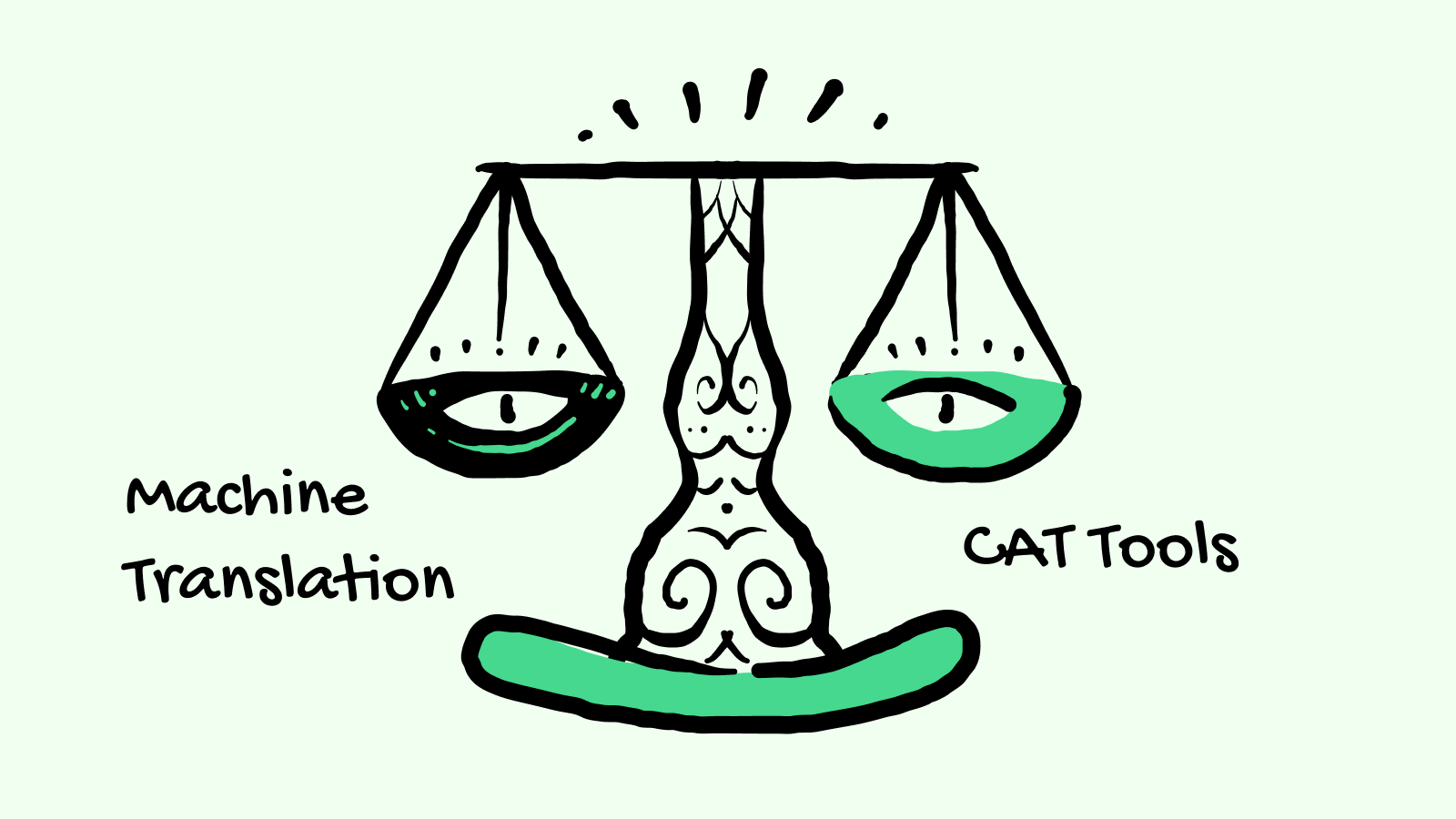
Machine translation and CAT tools solve the same core problem - converting text from one language to another - but they do it in fundamentally different ways. If you're a business scaling multilingual content, a translator choosing your toolkit, or a marketing team weighing speed against polish, understanding the key differences between these two approaches will directly shape your translation process, budget, and output quality.
The single biggest difference comes down to human involvement. Machine translation is fully automated: a computer program converts source text to a target language with no human intervention. Computer assisted translation tools, by contrast, are software applications that aid human translators - the translator works through every segment, making decisions about tone, terminology, and cultural fit, with the software handling memory, consistency, and formatting.
The short answer: For most teams handling large volumes of lower-stakes content (support docs, internal communications, knowledge bases), machine translation wins on speed and cost. For brand-critical, legal, medical, or creative content where accuracy and consistency matter, CAT tools with human translators deliver measurably higher quality. Many modern workflows combine both - and that hybrid approach is increasingly where the translation industry is heading.
What Is Machine Translation?
Machine translation (MT) is translation technology that uses algorithms and neural networks to automatically convert text from a source language into a target language - without a human composing or editing the output. Machine translation was first introduced in 1954, and the field has evolved dramatically since. Statistical machine translation emerged in the late 1980s, but it was neural machine translation that significantly improved translation quality, making modern MT systems powered by deep learning and transformer architectures the dominant paradigm today.
Defining strengths of machine translation software:
- Speed and scalability: MT can generate translations in seconds for large volumes of text - millions of characters processed in minutes.
- Cost-effectiveness: Raw MT is extremely affordable. For example, Google Cloud's NMT starts at roughly $20 per million characters, and Alibaba Cloud charges approximately $33 per million characters.
- 24/7 availability: Machine translation systems are always on - no scheduling, no human availability constraints.
- Improving model diversity: Modern MT engines (including tools like Google Translate, DeepL, and LLM-based systems) increasingly support tone and style adjustments, domain adaptation, and custom glossaries.
However, MT struggles with idiomatic expressions and cultural nuances. It can misrender rare terminology, produce inconsistent translations across a project, and quality drops for low-resource language pairs.
What Are CAT Tools?
Computer assisted translation (CAT) tools are specialized software that assist human translators throughout the translation process - they don't replace human linguistic expertise but amplify it. CAT tools have evolved from simple translation memory systems in the 1990s to complex, cloud-based ecosystems integrating translation memory, terminology databases, quality assurance checks, and increasingly, machine translation engine suggestions.
Defining strengths of computer assisted translation tools:
- Translation memory (TM): CAT tools use translation memory to store previous translations. The system stores previously translated segments and retrieves them when identical or similar content reappears - ensuring consistent translations and reducing redundant work over time.
- Terminology management: Terminology databases enforce correct terminology across projects, ensuring brand-specific, legal, or technical terms stay uniform regardless of which individual translators handle the work.
- Quality assurance: QA features identify errors in translations - missing tags, numeric mismatches, untranslated segments, and formatting inconsistencies are automatically flagged.
- Human expertise integration: The translator works segment by segment, bringing cultural awareness, stylistic judgment, and domain knowledge that no automated translation can reliably replicate.
Computer-assisted translation relies on human translators using specialized software - CAT tools provide an environment to enhance human translator productivity rather than bypass it.
Machine Translation vs CAT Tools: How They Compare at a Glance
| Factor | Machine Translation | CAT Tools |
|---|---|---|
| Best for | High-volume, lower-risk content: internal docs, support articles, content gisting, user-generated text | High-polish content: legal documents, medical, marketing, brand messaging, regulatory |
| Cost | Very low per character (e.g., ~$20–$33 per million characters via cloud APIs); often free for basic use | Licensing fees in hundreds to thousands USD/year per user, plus human translation labor rates per word |
| Speed | Extremely fast - full translated document in seconds to minutes | Slower - segment-by-segment human input, project management setup, review cycles |
| Quality | Good for common language pairs and structured content; error rates of 12–22% in benchmarks like WMT 2022 | Very high with skilled translators - professional human translations show <1% error rates in the same benchmarks |
| Human involvement | Low to none for raw MT; moderate with post editing | High - human translators are central at every step; reviewers and proofreaders often in the workflow |
The headline takeaway: machine translation wins on sheer speed and cost for large-volume, lower-risk work. CAT tools win when translation quality, brand voice, terminology consistency, and human oversight are non-negotiable.
Speed and Efficiency
Translation speed directly impacts go-to-market timelines, customer support responsiveness, and operational agility. When you need to translate content across dozens of language pairs under tight deadlines, how fast your translation technology performs is a decisive factor.
Machine translation operates autonomously without human intervention, processing entire documents - even millions of characters - in seconds. MT is suitable for quick translations of large text volumes where speed outweighs the need for perfection. By contrast, CAT tools require more time for manual translation compared to MT. A translator works through each segment, accepts or edits suggestions, checks terminology, and reviews formatting - all valuable steps, but inherently slower.
However, hybrid workflows change the picture. A large empirical study analyzing 90 million words across 11 language pairs and 879 linguists found that post editing of MT output is usually faster than full human translation, though speed gains vary significantly by language and content type. Many CAT tools integrate machine translation engines directly, allowing translators to start from an MT draft rather than a blank segment - improving efficiency without sacrificing human oversight.
Winner: Machine Translation - for raw throughput, MT is unmatched. But CAT tools with integrated MT suggestions close the gap substantially, and the time saved by MT can be partially offset by corrections needed downstream.
Translation Quality and Accuracy
Quality matters most when errors carry risk - reputational damage from a botched marketing campaign, legal exposure from a mistranslated contract, or patient safety from an inaccurate medical label. For any content meant for publication or external audiences, translation quality is the deciding factor.
The data is clear. A 2026 study comparing human and AI machine translation accuracy across academic English texts scored certified human translations at approximately 4.76 out of 5 across accuracy, style, and context metrics. AI-powered MT systems averaged roughly 3.73 - with DeepL performing best among MT systems at around 4.16, but still significantly behind human teams. MT can struggle with idiomatic expressions and cultural nuances, producing literal translations that miss the intended meaning. In the WMT 2022 benchmarks, professional human translations had overall error rates under 1%, while MT outputs ranged between 12% and 22% depending on the system and domain.
CAT tools improve translation quality through human expertise. Translation memory in CAT tools improves consistency over time - previously translated content is reused accurately. Terminology management ensures consistent translation of key terms. Quality assurance features catch potential errors that MT would miss entirely. Modern CAT tools can even suggest alternative phrasing using AI, giving professional translators more options without removing their decision-making authority.
Winner: CAT Tools - human-reviewed output remains measurably superior. The quality gap is narrowing for well-structured, non-creative content in high-resource language pairs, but for anything requiring an accurate translation with nuance, CAT tools deliver high quality translations that MT alone cannot match.
Cost Considerations
Budget constraints force trade-offs between "good enough" and "publication-ready." Understanding exact costs helps you allocate resources where they matter most.
Machine translation is cost-effective and often free for users at basic levels. Cloud MT APIs are remarkably affordable at scale: Alibaba Cloud's MT charges approximately $0.000033 per character (~$33 per million characters), while Google Cloud NMT runs about $20 per million characters beyond its free tier. For teams needing to translate content across many language pairs at volume, raw MT cost is negligible.
CAT tools carry different cost structures. Enterprise tools like Trados, MemoQ, and similar platforms typically require subscriptions or perpetual licenses running hundreds to thousands of dollars per user per year. On top of licensing, you pay human translation labor rates per word. However, CAT tools offset these costs over time: translation memory match discounts mean exact matches (previously translated segments) require no new translation labor. For highly repetitive content - product catalogs, software strings, reference documents - TM reuse can reduce translation costs dramatically across projects on the same project or across related ones.
Winner: Machine Translation - for raw cost at scale, especially for content with a higher tolerance for imperfection. But CAT tools often deliver better long-term ROI for organizations with repetitive, brand-sensitive, or ongoing translation needs, where existing translations reduce future labor costs.
Human Involvement Required
The level of human involvement shapes your staffing, workflow complexity, and ultimately the overall quality ceiling of your translations.
Machine translation operates with minimal or no human touch. In raw MT workflows, the translated text goes directly from engine to output. However, most organizations adopt Machine Translation Post Editing (MTPE), where human reviewers correct MT output. Post editing exists on a spectrum: light post editing addresses only major errors for comprehensibility, while full post editing brings stylistic polish, correct register, and cultural appropriateness - approaching the effort level of human translation.
CAT tools require active human participation throughout. The translator works through every translation unit, accepting or rejecting TM suggestions, enforcing terminology, and adapting tone. Multiple translators can collaborate on the same project with shared memories and glossaries, with CAT tools enabling collaboration across time zones and teams. CAT tools provide a structured environment for reviewing MT outputs, making them essential when different translators need to maintain consistency across a large body of work. In-context editing allows translators to see the final layout, ensuring the translated document reads naturally in its published format.
CAT tools improve accuracy through human oversight in translations - this is their fundamental design principle. They don't generate a new translation without human judgment.
Winner: CAT Tools - when maintaining high standards is the priority. Human linguistic expertise remains irreplaceable for context-dependent decisions about style, register, and cultural adaptation. Machine translation wins when you can afford minimal human involvement or when time and budget constrain your access to professional translators.
Machine Translation vs CAT Tools: Which Should You Choose?
- Choose Machine Translation if you need fast, affordable translations for large volumes of text - internal documents, knowledge base articles, user-generated content, or quick overview translations where speed matters more than polish. MT is ideal when budget constraints are tight, data security requirements are met by your provider, and you have tolerance for some post editing or accept "good enough" quality.
- Choose CAT Tools if you require high quality translations with brand consistency, work with specialized content (legal documents, medical, regulatory, marketing), or need to maintain consistency across projects involving multiple translators over time. CAT tools are preferred for technical, legal, medical translations requiring accuracy, and they're essential when the risk involved with errors is high.
- Consider a hybrid approach if you want the best of both. Modern translation combines both MT and CAT for efficiency in workflow. A hybrid approach combines MT for speed and CAT for control - content is pre-translated by MT, then reviewed and refined by human translators inside a CAT environment. This is increasingly the standard in the translation industry.
For teams looking to leverage machine translation with more control, platforms like MixTranslate represent how MT is evolving: offering comparison of outputs from 20+ AI models, tone and style controls, and terminology consistency features - bridging the gap between raw automated translation speed and the quality controls that CAT tools traditionally provide.
The right choice depends on your content type, quality requirements, and budget. For most teams, the answer isn't one or the other - it's knowing when to use each.
Frequently Asked Questions
Can machine translation and CAT tools be used together?
Yes, and this is increasingly standard practice. Many CAT tools integrate machine translation engines directly, presenting MT suggestions alongside translation memory matches for translators to accept, modify, or reject. Tools like MateCat, for example, support MT integration with productivity tracking and post editing measurement. CAT tools provide a structured environment for reviewing MT outputs, allowing translators to benefit from MT speed while applying human oversight to ensure accuracy. Quality estimation models can even route high-confidence segments through with minimal editing while flagging uncertain ones for full human review.
Which approach is better for specialized industries like legal or medical translation?
CAT tools with skilled professional translators are strongly preferred. Legal documents, medical texts, and regulatory content carry significant risk if errors occur - from legal liability to patient safety. These domains require correct terminology, domain expertise, and strict quality assurance that raw MT cannot reliably deliver. CAT tools are essential for translating specialized content accurately, with terminology databases enforcing approved terms and QA checks catching potential errors. Pure machine translation, even with post editing, carries more risk unless the post editing is performed by domain experts at full quality level.
How do I transition from one approach to the other?
Moving from pure MT to CAT tools (or a hybrid workflow) requires building foundational assets: translation memories from existing translations, glossaries of approved terms, and style guides. You'll need to train translators on the chosen CAT platform, define quality thresholds, and adjust project management workflows. If moving from CAT to incorporating more MT, consider adapting or fine-tuning MT models for your domain, setting clear post editing guidelines, and using quality estimation to determine which segments need human review. Start with a pilot project on lower-risk content, measure results against your quality benchmarks, and scale gradually. Many modern CAT tools make this transition easier by offering built-in MT engine connections and allowing teams to build TM assets incrementally as they work through an accurate Japanese translator project or any other language pair.